
Music theory can sound like a big, intimidating subject, especially for worship leaders who learned to play by ear or through experience rather than formal training. But at its heart, music theory is simply a way to understand how music works. It gives names to things you already hear and feel. For worship leaders, even a basic understanding of music theory can make leading music easier, more confident, and more effective.
You do not need to be a professional musician or read complicated sheet music to benefit from music theory. A little knowledge goes a long way—especially in a church setting where clarity, unity, and worship are the main goals.
Below is an infographic worship leaders can share with the members of their choir, to help those who may not know very much about music theory.
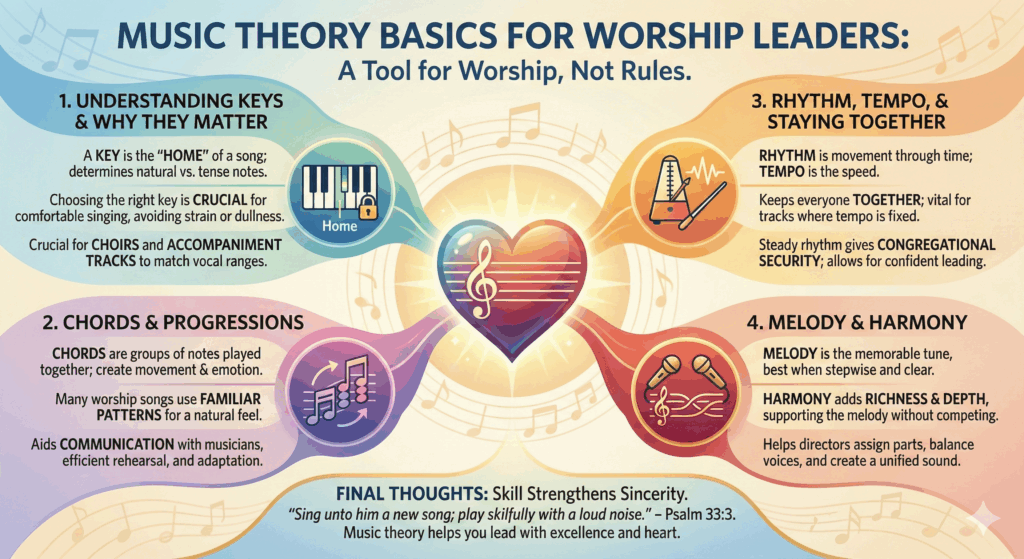
Understanding Keys and Why They Matter
One of the most important ideas in music theory is the concept of a key. A key is the “home” of a song. It tells you which notes sound natural and which ones sound tense or out of place.
For worship leaders, choosing the right key is crucial. A song that is too high can strain voices and discourage the congregation from singing. A song that is too low can feel dull and lifeless. When a song is in a comfortable key, people sing with confidence and joy.
This is especially important when working with choirs or using accompaniment tracks. Many high-quality tracks are available in multiple keys so that worship leaders can choose the one that best fits their singers. Understanding keys helps you make those choices wisely instead of guessing.
Chords and Progressions in Worship Music
Chords are groups of notes played together. Most worship songs are built using simple chord progressions that repeat throughout the song. These progressions create a sense of movement and emotion that supports the message of the lyrics.
You may notice that many worship songs feel familiar even when you hear them for the first time. That is because they often use similar chord patterns. Music theory helps explain why those patterns work and why they feel so natural to sing along with.
For worship leaders, understanding basic chords makes it easier to communicate with musicians, rehearse efficiently, and even adapt songs on the spot. It also helps when working with instrumental tracks, because you can better anticipate musical changes and prepare your singers for transitions.
Rhythm, Tempo, and Staying Together
Rhythm is how music moves through time. Tempo is how fast or slow that movement feels. In live worship, rhythm and tempo are what keep everyone together.
When a band is present, musicians naturally adjust to one another. When tracks are used, the tempo is set and does not change. This makes rhythmic awareness even more important.
A worship leader who understands rhythm can lead confidently, cue entrances clearly, and help singers stay aligned with the track. Even simple habits—like feeling the beat internally or counting through instrumental sections—can make a huge difference in how polished the worship sounds.
When rhythm is steady, the congregation feels secure. When it is not, people become hesitant and distracted. Music theory helps leaders recognize and correct these issues before they become problems.
Melody and Why People Remember Songs
The melody is the part of the song people hum when they leave church. It carries the lyrics and helps the message stay in the heart and mind.
Good melodies are usually stepwise, meaning they move smoothly from note to note. Music theory explains why these melodies are easier to sing and remember. Worship leaders who understand melody can choose songs that invite participation rather than performance.
When leading a choir or congregation, it is important to make sure the melody is clear and supported, not buried under harmonies or loud accompaniment. This is especially true when using tracks. A strong leader listens carefully and makes adjustments so the melody always leads.
Harmony and Blending Voices
Harmony adds richness and depth to worship music. It supports the melody and creates a fuller sound, especially in choirs.
Basic music theory helps worship leaders understand how harmonies fit together and why certain combinations sound pleasing. This knowledge helps directors assign parts, balance sections, and guide singers toward a unified sound.
When harmonies are well taught and well blended, they lift the melody instead of competing with it. This creates a worship experience that feels intentional and beautiful, even with simple musical tools.
Music Theory as a Tool for Worship
Music theory is not about rules or restrictions. It is a tool that helps worship leaders serve their churches more effectively. It brings clarity where there might be confusion and confidence where there might be uncertainty.
Most importantly, music theory supports the heart of worship. When leaders understand the music, they are less distracted by technical issues and more free to focus on God and the congregation.
As Psalm 33:3 reminds us:
“Sing unto him a new song; play skilfully with a loud noise.”
Skill does not replace sincerity—it strengthens it.
Final Thoughts
You do not need to master music theory to be a great worship leader. But learning the basics can transform how you lead, rehearse, and serve.
Understanding keys, chords, rhythm, melody, and harmony helps worship leaders make wise musical choices and create an environment where people feel comfortable lifting their voices in praise.
With thoughtful preparation, spiritual focus, and the support of well-produced accompaniment tracks, worship leaders can lead music that is clear, confident, and centered on God. Music theory simply gives you the language to do what you are already called to do—lead others in worship with excellence and heart.